
Choosing a CBSE school in Gorakhpur involves more than comparing prospectuses or examination results. Families need accurate information about board affiliation, classroom teaching, student supervision, and everyday expenses.
A suitable school should match a child's present needs while supporting steady academic progress. Travel arrangements, communication with teachers, and the availability of appropriate classes also influence the decision.
Careful enquiries help parents separate verifiable educational standards from promotional claims.
What CBSE Affiliation Tells Parents
CBSE affiliation establishes a school's formal relationship with the Central Board of Secondary Education for the approved educational level.
However, affiliation alone cannot measure classroom effectiveness, individual attention, or student satisfaction.
Verify status before considering admission.
The official CBSE affiliation directory allows families to search using a school's name, district or affiliation number.
Check the recorded institution name, location, approved level and affiliation period. A school that describes its teaching as CBSE-oriented does not necessarily hold the board's affiliation.
Recognition from the appropriate education authority and affiliation with CBSE serve different administrative purposes. Therefore, parents should not treat one document as a substitute for another.
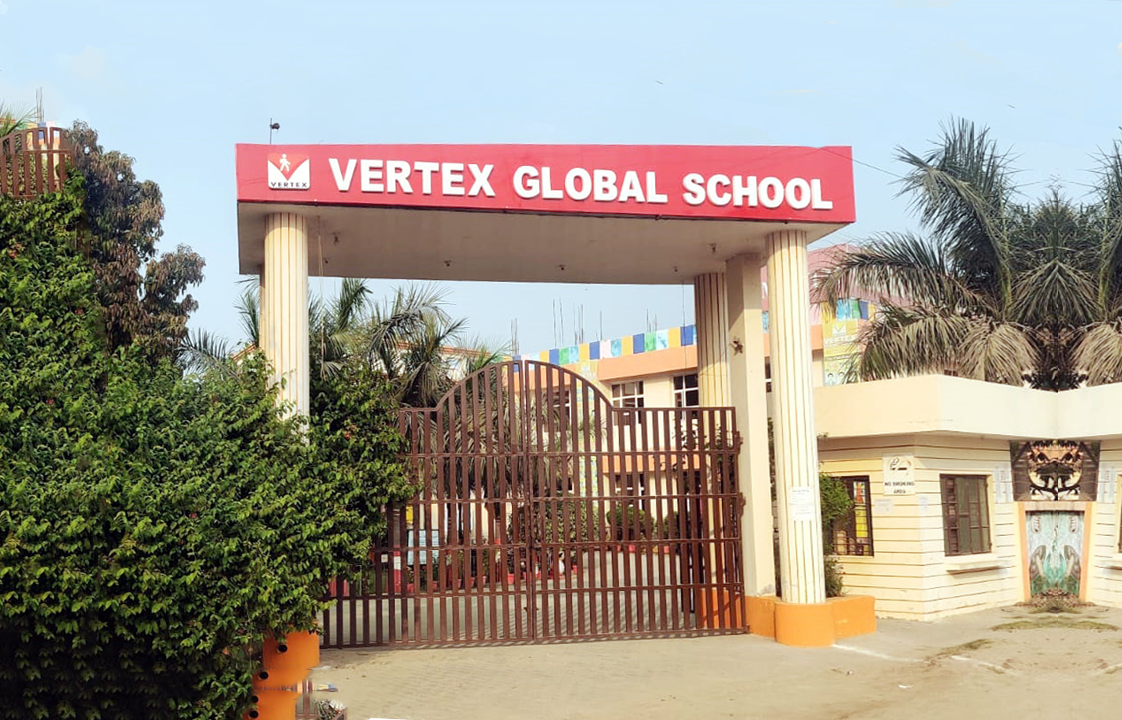
The directory identifies Vertex Global School in Gorakhpur as a CBSE-affiliated senior secondary institution under affiliation number 2132292.
Families can cross-check this entry when reviewing its current educational options.
Look beyond the certificate
Affiliation creates a regulatory framework, but each school makes operational decisions within applicable rules.
Ask how the management monitors teaching standards, reviews student progress and addresses complaints.
Furthermore, request information about the classes currently available rather than assuming every affiliated institution admits children at every stage.
Curriculum and Academic Expectations
The CBSE curriculum provides an academic structure, while individual schools determine much of the classroom experience.
Consequently, textbook lists and examination plans reveal only part of the educational picture.
Build strong foundations in the early years
Younger children benefit from systematic attention to language, numeracy, speaking, listening and social interaction.
Suitable activities can connect counting, reading and observation with familiar situations. Meanwhile, teachers should adapt the pace and complexity of tasks to children's development.
Families can ask how staff identify gaps in basic skills and what support follows.
Early intervention matters because unresolved difficulties can affect later work across several subjects.
Assess subject teaching in higher classes
English, Hindi, mathematics, science and social science require different instructional approaches.
For example, a science lesson may combine explanation with observation, while language teaching may emphasise reading, discussion and written expression.
Schools may use NCERT textbooks and other materials where appropriate to the relevant syllabus.
However, a textbook alone cannot establish whether students grasp concepts or apply them independently.
For secondary classes, enquire about the sequence of lessons, revision arrangements, practical work and board examination preparation.
Senior secondary applicants should also confirm which subject combinations the school actually offers.
Examine assessment and feedback
Regular assessment should reveal strengths, misconceptions and progress, not merely produce marks.
Ask whether teachers give specific comments, review corrected work and discuss persistent difficulties with families.
Moreover, sensible academic planning balances preparation for examinations with writing, reasoning, practical skills and independent study.
Excessive testing can obscure weaknesses if teachers rarely act on the results.
Teachers, Classrooms and Student Support
Qualified teachers matter, but parents should also examine how effectively those teachers interact with children.
During a permitted campus visit, notice whether classrooms support attention, discussion and respectful participation.
Questions that reveal teaching quality
Useful enquiries focus on identifiable practices rather than broad promises:
How do teachers check comprehension during lessons?
What happens when a student repeatedly struggles with a topic?
How does the school communicate specific academic concerns?
What opportunities exist for questions and constructive feedback?
How does management support teacher development?
For example, a school may schedule additional explanation, adjust exercises or meet parents when a child needs assistance.
Such arrangements deserve closer attention than slogans about innovative teaching.
Support different abilities without labels
Children progress at different rates and may need varied levels of academic or emotional support.
Therefore, ask how staff recognise individual needs and coordinate appropriate classroom responses.
A respectful environment allows students to ask questions without embarrassment.
Similarly, clear expectations and consistent discipline can encourage productive study without relying on fear or unnecessary pressure.
Facilities That Contribute to Education
Buildings and equipment matter most when students can use them safely and meaningfully.
A large campus cannot compensate for neglected classrooms, inaccessible resources or poor maintenance.
Inspect the following where the school permits access:
Classrooms for ventilation, lighting, seating and cleanliness.
Libraries for suitable books, access arrangements and reading activities.
Laboratories for equipment, supervision and practical work at relevant levels.
Computer facilities for functional devices and purposeful instruction.
Toilets, drinking water and handwashing areas for hygiene.
Sports spaces and accessibility arrangements for actual student needs.
Facilities vary with school level and applicable requirements.
Consequently, parents should enquire about access frequency, staffing and upkeep rather than assume every advertised resource supports daily instruction.
Ask who supervises laboratory sessions and how the school maintains equipment.
Equally, check whether younger children have suitable spaces for movement and supervised activities.
Student Safety and Emotional Wellbeing
School safety involves everyday procedures as well as responses to emergencies.
Families should seek clear explanations of responsibilities, reporting channels and supervision throughout the school day.
Observe routine safeguards
Check how staff manage entry gates, visitor identification, student attendance and authorised collection.
Also enquire about supervision during breaks, movement between classrooms and arrival or departure.
Relevant questions include:
Who receives a child when the school day begins?
How does the school manage an unexpected change in collection arrangements?
Which staff members respond to injuries or illness?
How does management communicate emergency instructions?
What procedures address bullying or inappropriate behaviour?
Transport arrangements, where available, deserve separate examination.
Ask about vehicle supervision, pickup points, authorised handovers and communication when delays occur.
Make wellbeing part of the conversation
Emotional security affects participation and attendance.
Therefore, parents should ask how teachers respond when children report intimidation, isolation or distress.
A meaningful child protection approach includes accessible complaint channels, responsible supervision and timely responses to concerns.
However, a policy's presence matters less than staff awareness and consistent implementation.
Activities Beyond Academic Lessons
Sports, music, art, reading clubs and public speaking can provide different opportunities for participation.
Their value depends on student interest, suitable instruction and manageable schedules rather than the number of activities advertised.
Parents should check which programmes operate for the relevant age group, how frequently sessions occur and whether participation involves additional costs.
Moreover, enquire whether quieter children receive encouragement without compulsory competition.
Balanced schedules protect time for homework, rest and family responsibilities.
As a result, an appropriate programme may serve a child better than an extensive calendar that leaves little room for recovery.
Admissions and Required Documents
School admission in Gorakhpur generally begins with an enquiry about class availability, eligibility and the institution's current procedure.
Requirements can change according to the entry class and applicable rules.
Clarify each admission stage
Ask the admissions office about application availability, age criteria, submission methods, timelines and communication of decisions.
Also confirm any interaction or assessment procedures and their applicability to the child's age group.
Do not assume that every school uses entrance tests or interviews.
In particular, admission practices for younger children must follow relevant legal restrictions and school obligations.
Before paying, ask which charges the school will refund under its written policy and what documents confirm admission.
Additionally, request the applicable school calendar and attendance expectations.
Prepare documents without making assumptions
Depending on the class and applicable requirements, schools may request:
A birth certificate or other acceptable age record.
Previous academic reports for students changing schools.
A transfer certificate where applicable.
Recent student photographs and guardian identification.
Residential details and any additional relevant records.
Nevertheless, this remains an illustrative list.
Request the school's current checklist and confirm whether staff need original documents for verification or copies for submission.
Fees, Location and Daily Practicalities
A school fits a family only when its educational arrangements remain manageable throughout the year.
Academic suitability should therefore accompany realistic calculations of cost and daily travel.
Compare the full annual expense
Ask for an itemised fee schedule rather than relying on the advertised tuition amount.
Depending on the school, expenditure may include admission charges, term fees, books, uniforms, transport and extracurricular participation.
Families should compare payment dates, recurring charges, annual revisions and the written refund policy.
Furthermore, clarify any optional services so that estimates do not contain hidden assumptions.
Keep payment receipts and ask how management announces fee revisions.
If siblings attend the same institution, enquire about concessions instead of assuming that the school applies them.
A lower initial payment does not necessarily mean a lower yearly expense.
Conversely, higher fees do not automatically establish stronger teaching or better student support.
Test the journey against family routines
Gorakhpur families should consider the journey between home and school, not distance alone.
Traffic conditions, reporting times, pickup arrangements and seasonal disruptions can alter the daily routine.
Where transport exists, check routes and supervision directly.
Otherwise, plan who will collect the child during unexpected schedule changes.
A realistic commute supports regular attendance and reduces avoidable fatigue.
Priorities Change Across School Stages
A child's age influences the meaning of a suitable school.
Therefore, families should adjust their questions rather than apply one uniform checklist across classes.
For early childhood and primary education, prioritise patient interaction, foundational skills, supervision and manageable routines.
In middle classes, examine subject continuity, writing demands, feedback and opportunities for independent work.
Secondary students may need structured revision, practical preparation and dependable subject teaching.
Meanwhile, senior secondary applicants should verify available streams, subject choices and academic assistance related to their plans.
Not every institution provides each stage.
Confirm eligibility and classroom availability directly before comparing programmes.
Parent-School Communication That Helps
Frequent messages cannot replace useful academic feedback.
Families should ask which channels teachers use for attendance, homework, assessment reports and urgent concerns.
Seek specific updates and clear responsibilities
A meaningful update explains what a child can do independently, which concepts require attention and what the school proposes next.
Meanwhile, parents can clarify appropriate response times for non-urgent messages.
During an enquiry, ask whether teachers schedule meetings, how management handles unresolved complaints and who contacts guardians after repeated absences.
Equally, check whether families receive information in an accessible format.
How Parents Can Make a Sound Choice
A campus visit and a focused conversation can clarify more than promotional descriptions.
However, families should record answers consistently so that comparisons reflect evidence rather than first impressions.
Questions worth taking to the admissions office
Ask for answers to these matters:
What does the current CBSE affiliation cover?
Which classes and subjects accept applications?
How do teachers track individual academic progress?
What safety, grievance and emergency procedures operate?
Which facilities do children use regularly?
What is the complete written fee schedule?
How does the school communicate with guardians?
What are the attendance, transport and admission policies?
Enquiring at Vertex Global School
Families considering Vertex Global School can use these questions to request current information about admissions, educational resources and school routines.
Its recorded senior secondary affiliation provides a useful starting point, but parents should still verify class availability and the details relevant to their child.
A scheduled campus enquiry can help families review practical arrangements, discuss academic requirements and request written clarification before committing to admission.
Conclusion
Selecting a cbse school in gorakhpur requires attention to verified affiliation, effective teaching, child safety and practical affordability.
Families should also consider the child's age, commuting needs and access to constructive feedback.
Written policies and direct enquiries provide stronger grounds for comparison than rankings or promotional language.
Parents considering Vertex Global School can enquire about current admissions and arrange an appropriate visit before deciding.
FAQs
How can parents confirm a school's CBSE affiliation in Gorakhpur?
Parents can check the official CBSE affiliation directory using the institution's name or affiliation number. They should compare the registered location, approved school level and affiliation period.
If records differ from admission materials, request clarification from the school before paying fees or completing the admission process.
What should families check before applying to a CBSE school?
Families should confirm affiliation, class availability, admission eligibility and the written fee schedule. They should also enquire about classroom teaching, student supervision, travel and communication practices.
A campus visit can help them assess whether daily arrangements suit their child, rather than simply accepting promotional descriptions.
Which documents might a school request for admission?
Schools may request proof of age, previous academic records, photographs, guardian identification and address details. A transfer certificate may apply when a child changes schools.
Since requirements depend on the class and applicable rules, parents should obtain the latest checklist directly from the admissions office.
How should parents compare CBSE school fees?
Parents should compare the total expected annual expense, not tuition alone. They can request itemised details of admission charges, recurring fees, uniforms, books, transport and activities.
Written payment schedules and refund terms also matter. Higher prices do not necessarily indicate better teaching or stronger student support.
Which academic indicators matter besides examination marks?
Effective academic review considers teaching clarity, consistent feedback, classroom participation and support for students who struggle.
Parents can ask how teachers assess conceptual knowledge, correct recurring errors and communicate progress.
Examination results provide some context, but they cannot reveal every child's actual everyday classroom experience.
How can families evaluate campus safety?
Families should enquire about visitor checks, student supervision, authorised collection, medical assistance and emergency procedures.
They should also ask how staff address bullying and child protection concerns.
Where school transport operates, pickup protocols and communication procedures require attention. Clear answers help parents assess actual safeguards.
What questions help during a school visit?
Ask which classes operate, how teachers monitor progress, what resources students use and how the school handles safety concerns.
Request the full fee schedule and relevant policies.
Parents should also ask exactly whom to contact about attendance, academic difficulties or unexpected changes in collection arrangements.
How can parents assess teacher support?
Parents can ask how teachers identify difficulties, explain unfamiliar concepts and provide feedback after assessments.
They may also enquire about teacher development and communication with guardians.
Practical examples of classroom support carry greater value than general assurances about excellence, particularly when a child needs additional assistance.
What matters most when choosing a school for younger children?
Younger children need patient supervision, suitable activities, clear routines and strong foundations in language and numeracy.
Families should inspect sanitation, arrival arrangements and communication practices.
They should also ask how teachers respond to separation concerns and different developmental needs without placing unnecessary academic pressure on children.
How can families assess extracurricular activities alongside academics?
Families can compare the activities available for their child's age, actual session frequency, supervision and additional charges.
They should consider individual interests and the demands of homework, travel and rest.
A manageable programme that encourages participation may be more suitable than an extensive schedule with limited access.